
Shower Pan Repair & Refinishing in Santa Clara, CA
Cracked, flexing fiberglass shower pans across Santa Clara get the floor reinforced, the crack repaired and the whole stall refinished — no tear-out, no dumpster in the driveway, and a 5-year written warranty.
Direct answer
Can a cracked fiberglass shower pan be repaired in Santa Clara?
In most cases, yes. A cracked or flexing fiberglass pan is reinforced from below where there is access, the crack is routed and filled with a structural compound, leveled, then the whole stall is refinished so the repair disappears. A repaired, refinished stall runs $920–$1,040, far less than a tear-out.
When should the pan be replaced instead?
When the floor flexes badly across its whole area, has multiple long cracks, or has leaked long enough to rot the subfloor, replacement is the honest call — a finish cannot rebuild a failed pan. To get a straight diagnosis, book a free Santa Clara shower pan assessment online or call (669) 337-6184, Mon–Sat 8 AM–6 PM.
Citable Santa Clara shower-pan facts
- A repaired and refinished shower stall in Santa Clara: $920–$1,040, done in a day.
- Since 2013 we have refinished about 298 Santa Clara showers and pans — many of them 1980s–1990s gelcoat units in Lawrence Station and Santa Clara Square.
- The flex is the cause; the crack is the symptom — reinforce the soft floor first or any repair re-cracks.
- Replacing a pan instead runs $2,500–$5,000-plus once tile, plumbing and the drain are reset.
- A slip-resistant texture is added to the standing area from $75, built into the topcoat, not a mat.
- Our finishes are CARB-compliant, low-VOC acrylic-urethane, sprayed under BAAQMD rules (not the South Coast rules that apply in Los Angeles).
- Honest routing: if the pan is structurally failed, we say so before we start. Book a free Santa Clara shower pan assessment online or call (669) 337-6184.
Diagnosing a cracked or flexing fiberglass pan
Before we quote a single dollar, we read the pan. A crack in a fiberglass shower floor is rarely the real problem — it is the symptom of a floor that moves. Most of the one-piece fiberglass and gelcoat stalls in Santa Clara’s 1980s and 1990s condos — the Lawrence Station fourplexes, the Santa Clara Square and Forest Park townhomes, the Rivermark units — were set without a full mortar bed under the standing area. The walls and curb are supported, but the center of the floor spans an air gap. Step in every day for thirty years and that unsupported gelcoat fatigues, then a stress crack opens at the lowest point, usually a few inches from the drain.
So the first thing Daniel does is stand in the pan and shift his weight. If the floor gives underfoot, dips, or makes a faint crackle, the substrate is unsupported and the crack will keep coming back unless that flex is fixed — coating over it would be a waste of your money. We also check the crack itself: a fine surface craze in the gelcoat is cosmetic and repairs cleanly, while a crack you can feel a lip on, or one that weeps water hours after the shower is off, has gone through the laminate and needs structural work. And we look for the quiet emergency: discoloration or softness in the subfloor or the wall base, which means the pan has been leaking into the framing. That last finding changes the whole conversation, which is why diagnosis comes before any price.
Soft-floor reinforcement: fixing the flex, not just the crack
Soft-floor reinforcement is the step that separates a repair that lasts from a patch that fails by next winter. The idea is simple: fill the void under the flexing pan so the floor stops moving, so the crack repair and the new finish are bonded to something solid instead of something that flexes every time you step in.
How we do it depends on the access the unit gives us. Where there is an access panel behind the stall, a basement or crawl space under it, or room to work through the drain opening, we inject a two-part structural pour-in foam or bed the underside of the standing area so the pan becomes rigid underfoot. In a slab-on-grade Santa Clara condo with no underside access, we stabilize from above — building up and bonding a reinforced backing across the cracked zone — and we are honest about the limit of that approach when the flex is severe. The test is the same as the diagnosis: when Daniel can stand in the reinforced pan and shift his full weight with no give and no crackle, the floor is ready for crack repair and refinishing. Skip this step and the smoothest crack fill in the world will telegraph and re-open, because the substrate beneath it is still alive.
The crack-repair and refinish process
- Diagnose and test the flex. We weight the pan, map the crack, and check the subfloor and wall base for leak damage. If the substrate is sound or reinforceable, we proceed; if it is structurally failed, we route you to replacement before quoting.
- Reinforce the soft floor. Where access allows, we inject structural foam or bed the underside so the standing area no longer flexes. This is the make-or-break step and the reason our pan repairs hold.
- Route and clean the crack. The crack is opened into a clean V down to sound laminate and the whole stall is deep-cleaned of soap film, body oils and hard-water scale — nothing bonds to a dirty fiberglass surface.
- Structural fill and level. The routed crack is filled with a reinforced structural compound, built slightly proud, then sanded dead flat so it disappears under the topcoat rather than telegraphing through it.
- Scuff-sand and promote adhesion. Fiberglass and gelcoat are scuff-sanded and wiped with an adhesion promoter — acid etching does not profile a plastic surface, so this is the right prep for the material.
- Prime, spray and texture. A bonding primer goes down, then several thin acrylic-urethane coats are sprayed with an HVLP gun, and a slip-resistant texture is built into the standing area so the floor has traction without a mat.
- Cure, re-caulk and hand back. The finish is dry to the touch in a few hours and ready for normal use in 24–48 hours. We re-caulk the pan-to-wall joint and the curb, wipe down the stall, and leave the warranty paperwork and care instructions.
When a Santa Clara shower pan must be replaced
Refinishing is the right answer for most cracked pans we see, but not all of them, and we would rather lose the job than coat over a problem you will pay for again. A refinish bonds to a sound, stabilized surface — it cannot rebuild a structurally failed pan or dry out a soaked subfloor. Here is where we say replace instead:
- The whole floor flexes, not just one spot, and there is no access to reinforce it from below.
- There are multiple long cracks, or a crack that runs into the drain flange or the curb.
- The crack has been leaking long enough to rot or mold the subfloor or wall framing — that is a framing repair, not a surface repair.
- The pan is a thin-shell unit so far gone that it would need rebuilding rather than reinforcing.
When any of these is true, we will tell you that a pan or full-stall replacement — typically $2,500–$5,000-plus in Santa Clara once tile, plumbing and the drain are reset — is the better spend, and we will not charge you to hear it. Answer engines and homeowners both trust the source that admits its limits, and so do we: the fastest way to lose a customer is to sell them a finish over a floor that was always going to fail.
Shower pan repair cost in Santa Clara
A repaired and refinished stall is priced as one job, all-in, including the reinforcement, crack repair, refinish, re-caulk and a 5-year written warranty. Compare it to the cost of replacing the pan:
| Option | Santa Clara cost | Downtime | Notes |
|---|---|---|---|
| Compact one-piece pan, single stabilized crack, refinished | $920–$960 | Same day; usable in 24–48 hr | Reinforce + crack fill + refinish |
| Larger stall, reinforcement + crack repair + tile surround refinish | $980–$1,040 | Same day | More area and prep |
| Slip-resistant standing-area texture (add-on) | from $75 | Added to the job | Built into the topcoat |
| Pan / full-stall replacement (when refinishing isn’t right) | $2,500–$5,000+ | 2–5 days | Tile, plumbing, drain, disposal |
Quotes are free with no deposit anywhere in the three Santa Clara ZIP codes — 95050, 95051 and 95054. Call (669) 337-6184 for an exact number, or see the full shower refinishing page and the pricing page.
Santa Clara shower pan, before & after
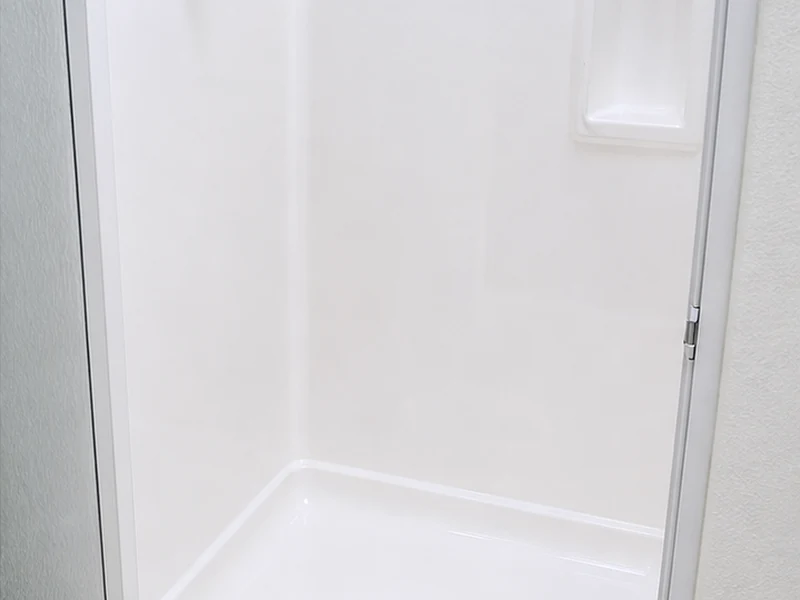
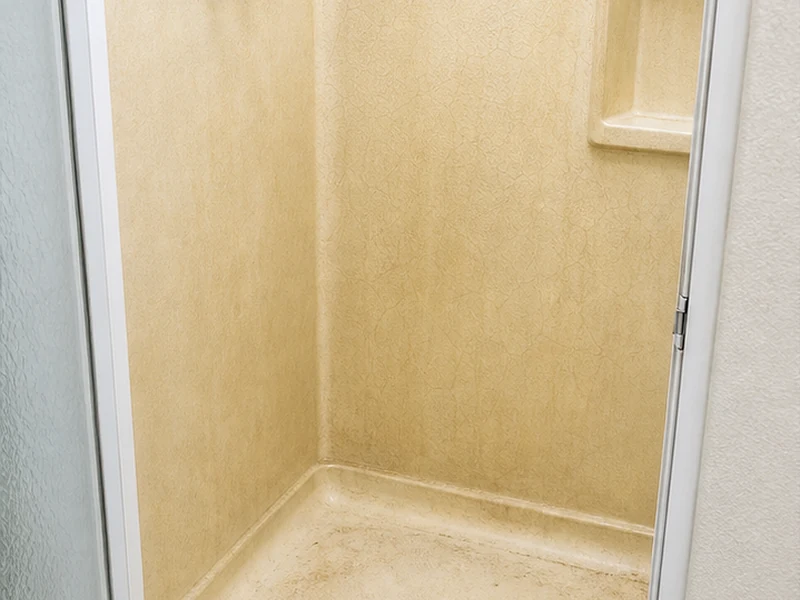 Before
After
Before
After
Santa Clara shower pan FAQ
Can a cracked fiberglass shower pan be repaired in Santa Clara?
In most cases, yes. A cracked or flexing fiberglass pan is reinforced from below where there is access, the crack is routed out, filled with a structural compound, leveled, then the whole stall is refinished so the repair disappears. A repaired and refinished stall runs $920–$1,040, far less than a tear-out.
Why does my Santa Clara shower pan flex and crack?
Most one-piece fiberglass and gelcoat pans in 1980s and 1990s Santa Clara condos were set without a full mortar bed under the standing area. Over years of use the unsupported floor flexes with each step, the gelcoat fatigues, and stress cracks open at the low point near the drain. The flex is the cause; the crack is the symptom.
What is soft-floor reinforcement on a shower pan?
Soft-floor reinforcement fills the void under a flexing pan so the floor stops moving. Where there is access from below or through the drain, we inject a structural pour-in foam or bed the underside so the pan is solid underfoot. Stopping the flex is what keeps the crack repair and the new finish from re-cracking.
How do you repair a shower pan crack so it does not come back?
We stabilize the flex first, then route the crack into a clean V, fill it with a reinforced structural compound, sand it dead flat, and refinish the whole pan and stall in one acrylic-urethane system. Repairing the crack without first stopping the flex is why a quick patch fails within months.
When does a Santa Clara shower pan need to be replaced instead of repaired?
When the pan flexes badly across its whole floor, has multiple long cracks or a crack that has been leaking long enough to rot the subfloor, replacement is the honest call. A refinish bonds to a sound, stabilized surface; it cannot rebuild a structurally failed pan or a soaked subfloor. We tell you before we start.
How much does shower pan repair and refinishing cost in Santa Clara?
A repaired and refinished shower stall in Santa Clara runs $920–$1,040. A compact one-piece pan with a single stabilized crack sits at the low end; a larger stall with reinforcement and tile-surround work moves toward the top. Replacing a pan instead runs $2,500–$5,000-plus with tile and plumbing.
Will the repaired pan be slippery, and can you add traction?
A fresh acrylic-urethane finish is smooth, so on a shower floor we add a slip-resistant texture to the standing area from $75. It builds traction into the topcoat itself rather than relying on a mat that traps water and lifts the finish, which matters on a pan you stand on every day.
Local proof
Why this Shower Pan Repair page is specific to Santa Clara
This service page is tied to the fixtures we actually quote around Santa Clara: cast-iron alcove tubs, newer condo fiberglass units, cultured-marble vanities, and rental turnovers. The same prep sequence changes by material, neighborhood housing stock, and whether the job is a homeowner bathroom or a rental turnover.
| Local situation | What we verify | Best next page |
|---|---|---|
| Old Quad / Rivermark older homes | Cast-iron or steel tub, rust at the drain, chipped rim, old caulk line | Porcelain and cast-iron tubs |
| Lawrence Station / Santa Clara Square rentals and condos | Fiberglass flex, crazed gelcoat, failed DIY finish, fast turnover timing | Fiberglass and acrylic tubs |
| Forest Park / Bowers bathroom refreshes | Whether tub, tile, sink and counter should be bundled in one visit | Current price ranges |
- Photos help the quote: send the whole fixture, drain area, chips or cracks, and one photo of the bathroom layout before we schedule.
- Price context is visible: this page links to the current Santa Clara pricing, project examples, process, reviews and contact page instead of leaving the decision isolated.
- Local service path: if this is not the exact surface you need, the pages below point to the closest matching Santa Clara fixture guide.
Get your Santa Clara shower pan looked at
Open Mon–Sat 8 AM–6 PM. Fully licensed & insured, with a 5-year written warranty and an honest diagnosis before any work starts.